This article is for educational and informational purposes only and does not constitute any betting advice.
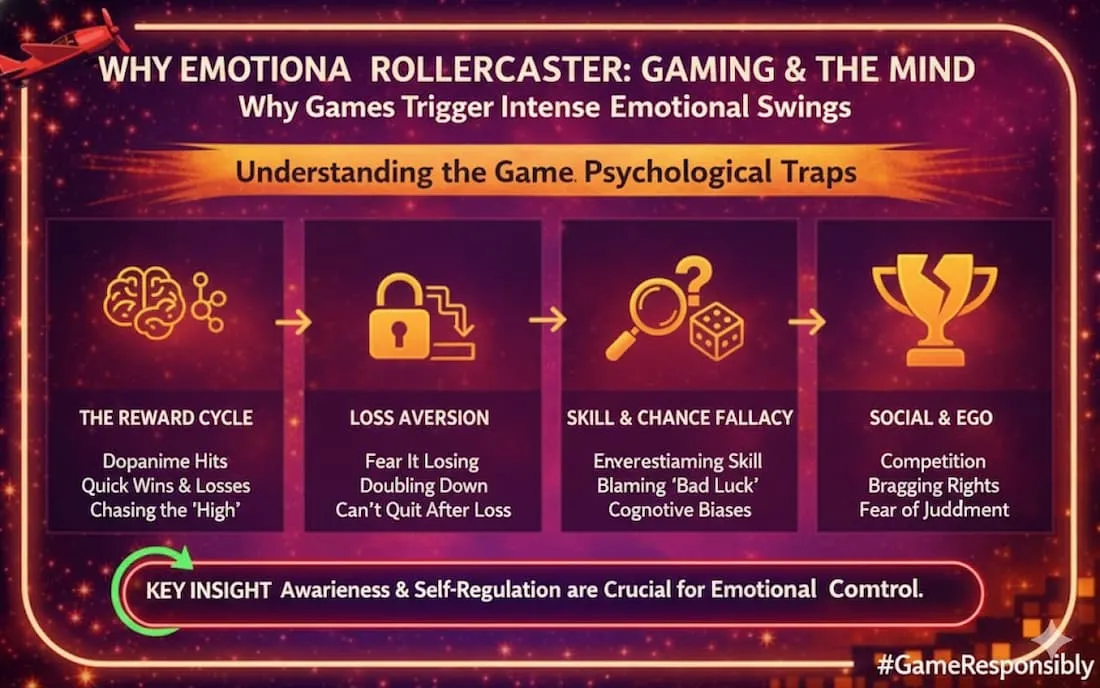
1️⃣ Gambling-style gameplay: The primal trigger point of emotions.
The core magic of Aviator lies in turning every round into a high-stakes gamble. The virtual plane takes off from 1.00x, and the stop button is your only lifeline. Missing out on high multipliers means losing potential winnings, while delaying too long results in your bet instantly becoming zero. The contrast between the 97% return rate and the random crashes keeps your brain constantly on edge: greed at 2.5x, fear at 5x, and exhilaration at 10x – dopamine levels fluctuate wildly with the multiplier. Your excitement level changes with the multiplier. The dual betting option allows you to place a safe bet at one multiplier and a high-risk bet at another.
2️⃣ Human Nature Traps: Designs that Precisely Target Emotions
Aviator‘s psychological manipulation: The “near-win effect” makes the frustration of “almost succeeding” more agonizing than pure failure; the “illusion of control” leads players who manually operate the game to mistakenly believe they can predict random outcomes, reinforcing their self-perception of control over wins and losses. Coupled with the sensory overload of roaring sound effects and flashing multipliers, and the seamless, instant top-up design, rationality is completely overridden by impulse, and emotions become increasingly entangled in a cycle of “just one more try.” Players’ emotions are controlled by this constant urge to try again, ultimately leading to a loss of self-awareness and a complete loss of self.
3️⃣ Social Resonance: An Amplifier of Emotions
Millions of players interact in real time, amplifying emotions exponentially. The “10x withdrawal” announcement in the chat box, visually amplified, triggers collective frenzy, causing a collective “surge” that overwhelms individual judgment. The euphoria triggered by “visual impact rewards” lowers people’s guard. The collective frenzy and subsequent disappointment are contagious, transforming individual emotions into a mass phenomenon, leading players to completely lose control in this highly charged environment.
Key conclusion:
The reason Aviator can manipulate emotions is essentially due to a triple threat of “high-risk mechanisms + human weaknesses + social catalysts.” It transforms the game into a testing ground for emotions, and the real control never lies with the airplane, but with the player’s rationality and self-control.
Remember: playing Aviator is not about winning the most, but about control.
The real opponent is not the game, but your own emotions. Staying calm is more important than any skill, and rationality is always the best strategy.
Emotional fluctuations are a key reason why most players lose money.
© 2026 AviatorGuide.com – All rights reserved.
This website is an indep
This website provides educational and informational content about Aviator-style crash games, focusing on gameplay mechanics, player psychology, and responsible decision-making.
We do not operate any gambling services and do not accept real-money bets.